You can smooth, straighten, or curl your hair perfectly—and still see frizz return a few hours later. The reason is often not that your styling “failed.” Frizz is influenced by the condition of the hair, moisture in the environment, heat, friction, and the way the hair was prepared and finished.
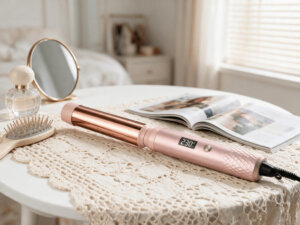
Frizz is often treated as a surface problem: add more product, use more heat, or go over the hair one more time.
But frizz usually tells you something about how the hair fiber is interacting with moisture and its environment.
Understanding that makes it much easier to build a styling routine that looks smoother without repeatedly exposing your hair to unnecessary heat.
What Actually Causes Frizz?
The outer layer of each hair strand is called the cuticle. When the cuticle lies relatively smooth, light reflects more evenly and the hair tends to look smoother and shinier.
When the cuticle is raised, weathered, or uneven, the hair can feel rougher and interact with moisture in the air more easily.
Frizz can become more noticeable when:
- The hair is dry or porous
- The cuticle has been affected by chemical processing or repeated heat
- Humidity changes the amount of moisture around the hair
- There is friction from towels, brushing, clothing, or sleep
- The natural pattern of the hair is disrupted
- Static causes individual strands to separate and lift
So frizz is not always one problem with one solution.
THE KEY IDEA
Frizz is often a combination of hair condition + moisture + friction + styling technique.
1. Humidity Can Change Your Style After You Leave the House
Hair can absorb and lose moisture from the surrounding environment.
When humidity is high, water molecules in the air can interact with the hair fiber. For some hair types—especially porous, dry, damaged, curly, or chemically treated hair—this can cause the strand to swell and the style to shift.
That is why hair that looked smooth indoors can begin to puff, wave, or frizz after time outside.
The solution is not always more heat. In fact, repeatedly straightening the same sections may temporarily smooth the surface while adding more stress to hair that is already vulnerable.
2. Dry Hair Can Become More Difficult to Keep Smooth
Frizz and dryness are not exactly the same thing, but they often appear together.
Hair that has lost moisture or has a more weathered cuticle can feel rough and become harder to control. The ends may separate, shorter broken hairs may stand away from the surface, and the overall finish can look less polished.
This is especially common after repeated bleaching, coloring, high-temperature styling, or aggressive brushing.
If your hair is becoming progressively drier, simply adding another styling pass may hide the symptom for a short time without addressing the condition of the hair.
Sometimes frizz is not asking for more styling. It is asking for less stress.
3. Your Hair May Not Be Fully Dry Before Styling
If you are using a conventional straightener or curling iron, make sure the hair is properly dry before applying direct heat.
Hair that still contains noticeable moisture can respond inconsistently to styling. Damp areas may not hold the same shape, and you may end up going over them repeatedly because the result looks uneven.
Pay particular attention to the roots, underneath sections, and dense areas that can stay damp longer than the surface.
Unless your tool is specifically designed for wet-to-dry use, fully drying the hair first usually gives you more control and reduces unnecessary repeated passes.
4. Large Sections Can Create an Uneven Finish
When too much hair is placed in a straightener or around a curling barrel at once, the heat may not affect every strand in the same way.
The outer hair may look smooth while the inner hair remains less controlled. The natural texture then begins to show through, which can look like frizz.
Working with manageable sections helps the tool make more even contact and can reduce the temptation to repeat the same pass several times.
5. Too Much Heat Can Make Frizz Worse Over Time
High heat can create an immediately smooth finish, which makes it tempting to keep increasing the temperature whenever frizz appears.
But if the temperature is higher than your hair needs—or if the same section is reheated repeatedly—the cumulative stress can contribute to dryness, roughness, and breakage.
Those changes can make the hair more difficult to keep smooth in the future.
Instead of treating maximum heat as the solution, use the lowest effective temperature that creates the style efficiently.
6. Friction Can Undo a Smooth Style
Not all frizz comes from heat or humidity.
Friction can lift and separate strands after styling. Think about rough towel drying, repeatedly touching the hair, pulling clothing over your head, sleeping on the hair, or brushing it aggressively once the style is finished.
For textured or curly styles, excessive brushing after the hair has been shaped can also separate the curl pattern and create a frizzier appearance.
A smoother styling routine includes what happens after the tool is switched off.
7. Static and Frizz Are Related—but Not the Same
Static is caused by an imbalance of electrical charge. It often becomes more noticeable in dry environments and can make individual hairs repel one another, creating flyaways.
Frizz is broader. It can involve moisture, porosity, texture, damage, breakage, and environmental conditions.
They can look similar, and they can happen at the same time, but the cause is not always identical.
This is also where ionic styling technology can be useful. Negative ions are commonly used in styling tools to help reduce static electricity and improve the feeling of smoothness during styling.
FRIZZ VS. STATIC
Frizz can have many causes. Static is specifically related to electrical charge.
8. Let the Hair Cool Before You Keep Adjusting It
Heat helps temporarily reshape the hair, but cooling is part of the styling process too.
If you immediately brush, pull, or restyle the hair while it is still warm, the shape may not have had enough time to settle.
For curls, allowing each section to cool before separating or brushing it out can help preserve definition. For straight styles, avoid repeatedly touching or bending freshly styled sections while they are still hot.
Sometimes a better finish comes from doing less after the heat has done its job.
How to Reduce Frizz When Heat Styling
A smoother result usually comes from several small decisions working together:
Before styling
Start with properly dried, detangled hair. Use suitable conditioning products and apply heat protectant evenly.
During styling
Choose manageable sections, use the lowest effective temperature, and avoid repeatedly reheating the same hair.
After styling
Allow the hair to cool, minimize unnecessary brushing and touching, and use finishing products appropriate for your hair type and environment.
Between styling sessions
Protect the style from excessive friction and avoid automatically reaching for a hot tool every time a few strands move out of place.
When Frizz Is Really Breakage
Not every short hair standing up from the surface is frizz.
Some may be new growth. Others may be broken hairs.
If you are seeing increasing numbers of short, uneven strands—especially alongside dryness, split ends, or snapping—it is worth looking at your overall routine.
Repeated high heat, chemical processing, tight hairstyles, and aggressive mechanical handling can all contribute to breakage.
Smoothing those hairs temporarily does not remove the underlying cause.
The Filvin Approach to Smoother Styling
At Filvin, we believe smoother styling should not mean fighting your hair harder.
Understanding your hair—its condition, texture, environment, and how it responds to heat—helps you make better styling decisions.
Sometimes that means adjusting the temperature. Sometimes it means changing the section size, reducing friction, or simply allowing the hair to cool before touching it again.
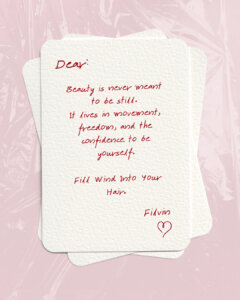
The goal is not perfectly motionless hair. It is hair that feels considered, cared for, and free to move.
Beauty is meant to move.
Quick Takeaway
- Frizz can be influenced by humidity, dryness, porosity, friction, static, and styling technique.
- A smooth finish can change when hair interacts with moisture in the environment.
- Make sure hair is properly dry before using conventional direct-heat tools.
- Work in manageable sections instead of repeatedly reheating large sections.
- More heat is not always the answer to frizz.
- Reduce friction after styling and allow the hair to cool before over-handling it.
- Static and frizz can look similar, but they are not exactly the same.
- Short flyaway hairs may sometimes be breakage rather than frizz.
The best anti-frizz routine is not about forcing every strand into place. It is about understanding why the hair is reacting in the first place.