Curl Direction Explained: Which Way Should You Curl Your Hair?

HAIR TUTORIALS · CURLING

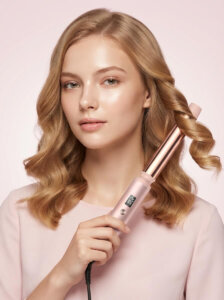
Two curls can be made with the same tool, the same section size, and the same amount of heat—and still look completely different because they travel in different directions. Curl direction affects how the hair frames the face, how sections sit beside one another, and whether the finished style feels polished, open, soft, or undone.

THE CURL COMPASS

← Toward    |    Away →

Direction is not a right-or-wrong choice. It is a design choice.

CURL DIRECTION · FACE-FRAMING COMPARISON

What Curl Direction Actually Changes

When hair bends around a curling tool, it develops a directional pattern. Once several sections are styled, those patterns begin interacting with one another.

If neighboring curls travel in the same direction, they are more likely to visually join into a unified shape. If they alternate, they tend to separate from one another and create more irregular texture.

At the front of the hair, direction also changes whether the style moves toward the face or opens away from it.

Direction controls three things

01 · Framing

How the hair approaches or opens around the face.

02 · Separation

Whether neighboring curls merge or remain visually distinct.

03 · Silhouette

Where movement and visual width appear in the finished style.

DIRECTION 01

Curling Away From the Face

Curling the front sections away from the face directs the hair outward rather than inward across the cheeks.

This often makes the front feel more open and can emphasize movement around the cheekbones and sides of the hairstyle. It is commonly used for flowing waves, blowout-inspired shapes, and styles where the face-framing pieces are meant to sweep backward.

What it tends to create

Open framing · visible movement · a swept-back feeling · more separation around the face

DIRECTION 02

Curling Toward the Face

Turning the front sections inward creates a more wrapped effect around the face. Instead of opening outward, the hair moves closer toward the cheeks or jawline.

The result can feel softer, rounder, or more contained depending on the haircut and curl placement. On shorter or layered styles, inward movement can also emphasize the shape of the cut.

What it tends to create

Closer framing · softer containment · rounded movement · emphasis around the face

DIRECTION 03

Alternating Curl Directions

Alternating directions means one section curls one way and the next section curls the opposite way.

Because adjacent sections are not all trying to settle into the same pattern, they are less likely to merge into one large uniform curl. This can create more separation, dimension, and an intentionally irregular texture.

It is especially useful when you want waves or curls to feel less formal and less “set.”

What it tends to create

Separation · texture · dimension · a more undone finish

DIRECTION 04

Curling in One Consistent Direction

When neighboring sections follow the same direction, the curls can settle together more easily after cooling and brushing.

This is useful when the goal is not to see lots of separate curls, but to create a smoother, more continuous wave pattern. The technique can produce a more deliberate and polished finish, especially when section size and placement are also consistent.

What it tends to create

Unified movement · smoother wave pattern · polished structure · visual consistency

FACE-FRAMING RULE

Decide the front first.

The front pieces influence the personality of the hairstyle more than most sections at the back. Choose how you want the hair to frame the face, then build the rest of the direction pattern around that decision.

How to Curl the Left and Right Sides

This is where direction can become confusing because your hand position changes when you move from one side of the head to the other.

Instead of memorizing “turn left” or “turn right,” look at the section itself. Ask: Do I want this piece to travel toward the face or away from it?

That visual rule remains the same even when your hands, mirror image, or tool orientation changes.

Mirror cue

For an away-from-face result, the front section on each side should move backward, toward the ear rather than across the cheek.

What About the Back of the Head?

The back does not always need the same directional logic as the front.

For a relaxed look, alternating sections through the back can help prevent the curls from collecting into a few large clumps. For a polished wave, a more consistent directional pattern may be useful because the curls can be brushed into a smoother shape.

The important part is that the pattern supports the finish you want rather than following a rule automatically.

Direction + Section Size = A Different Result

Direction never works alone.

Alternating + smaller sections

More visible texture and separation.

Alternating + larger sections

Broad, irregular movement with a softer finish.

Same direction + medium sections

A useful base for a polished, brushed-out wave.

Away from face + front layers

Creates a swept-back face-framing effect.

Choose Direction Based on the Finish

IF YOU WANT…

Soft, undone waves

Alternate directions, especially through the mid and back sections. Keep the front intentional.

Loose, flowing curls

Try curling the front away from the face and use a controlled pattern through the rest.

A polished wave

Use more consistent direction so cooled curls can be brushed into one continuous shape.

A softer face-framing effect

Experiment with selected front pieces curving inward rather than sweeping everything away.

A Simple Direction Exercise

If curl direction still feels abstract, test it visually instead of trying to memorize it.

Try three sections side by side

Section 1: curl away from the face.
Section 2: curl toward the face.
Section 3: repeat the direction of Section 1.

Let all three cool completely. Then separate them lightly and observe where they merge and where they push apart. That small experiment makes directional behavior much easier to understand.

There Is No One Correct Curl Direction

“Always curl away from the face” is useful as a beginner shortcut, but it is not a universal styling law.

Some looks need outward movement. Some benefit from inward framing. Some look best when directions alternate. Others depend on every section working together in one pattern.

The better question is not “Which way am I supposed to curl?” It is “Which way should this section move in the finished hairstyle?”

Direction is part of the design.

Choose where you want the hair to move—then let the curl follow.

Continue Reading