How to Choose the Right Curl for Your Hair Length?

HAIR INSPIRATION · STYLE IDEAS

A curl does not exist on its own. Put the same bend on a chin-length bob and waist-length hair, and the result can feel completely different. Length changes how many curves you can see, where volume sits, and how much weight pulls the finished shape downward.

SHORT · MEDIUM · LONG

THE SIMPLE RULE

The shorter the hair, the more visible each bend becomes.

The longer the hair, the more room a curl has to open, repeat, and fall.

Why Hair Length Changes the Curl

Imagine wrapping the same size section around the same curling tool.

On short hair, there may only be enough length for one clear bend. On medium hair, the shape can develop into a fuller wave or curl. On long hair, several curves can appear—but the extra weight can also stretch them and make the result look looser.

That is why choosing a curl should begin with the finished silhouette you want, not simply with copying a reference photo.

SHORT HAIR

Make Each Bend Count

On bobs and shorter cuts, a little movement goes a long way.

A very tight curl can quickly create more volume and roundness than expected because there is less length to visually stretch the shape. For an everyday finish, broader bends and softly curved ends often feel easier and more modern.

If the cut has layers, use them. Different lengths naturally create variation, so the hair does not need to be curled identically from section to section.

Try

Soft bends · relaxed waves · curved ends · subtle outward flips

Watch for

Starting too close to the root when you do not want extra width or volume.

The mood

Airy, modern, light.

MEDIUM-LENGTH HAIR

The Most Flexible Length for Curl Shapes

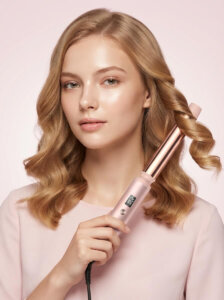
Hair around the shoulders to chest has enough length to show a complete curl pattern without as much weight pulling the shape downward.

That makes it especially flexible. You can create soft waves for everyday movement, loose curls for fuller body, or more defined curls when you want the texture to become the focus.

Where you begin curling makes a big difference: start higher for more overall volume, or begin around the mid-lengths for a calmer top and softer silhouette.

Try

Soft waves · loose curls · polished curls · face-framing bends

Watch for

Creating identical curls everywhere if you want a relaxed, natural finish.

The mood

Versatile, balanced, expressive.

Don't ask, “Which curl is best for my length?”
Ask, “How do I want this length to move?”

LONG HAIR

Think About Shape From Top to Bottom

Long hair gives curls more space to develop, but it also introduces more weight.

A curl that looks defined immediately after styling may settle into a looser shape later. That can be beautiful—especially if you plan for it.

For flowing movement, larger sections and softer bends can create an elongated wave. For more visible curls, smaller sections or stronger initial definition can help the pattern remain noticeable as it relaxes.

Long hair also benefits from deciding where you actually want volume. Curling from high on the head creates a very different silhouette from keeping the roots smoother and concentrating movement through the lower lengths.

Try

Flowing waves · loose curls · layered curls · soft face-framing movement

Watch for

Making the lower half very full while leaving the upper lengths completely flat if you want a balanced silhouette.

The mood

Flowing, dimensional, soft.

A Quick Visual Guide

If your hair is short…

Start with softer bends. Add more definition only if you want extra volume or a stronger curl statement.

If your hair is medium…

You have the widest range. Let the occasion and the amount of volume you want guide the curl.

If your hair is long…

Think about how the curl will fall after styling, not only how it looks the moment it leaves the tool.

Length Isn't the Only Thing That Matters

Two people with hair at exactly the same length can still need very different approaches.

Density

Thicker-looking hair can build volume quickly; lower-density hair may benefit from strategic lift and fewer heavy-looking sections.

Layers

Layers change where curls sit and can make movement more visible throughout the shape.

Natural texture

Your existing bend, wave, or curl can influence how much reshaping is actually necessary.

The finish you want

A relaxed wave and a defined curl may require completely different choices even on the same head of hair.

Where Should the Curl Begin?

This one choice can change the entire proportion of a hairstyle.

Higher up

Creates more overall texture and can increase the sense of volume through the upper lengths.

Mid-length

Keeps the top calmer while creating visible movement through the body of the hair.

Lower down

Creates movement mainly through the ends for a subtle, polished finish.

Use Inspiration Photos More Carefully

When you save a hairstyle, look beyond the curl itself.

Is the model’s hair shorter or longer than yours? Does it have more layers? Where does the curl begin? Are the ends curled? Has the finished hair been brushed out? How much root volume is there?

Those details explain why simply copying the visible curl does not always reproduce the same overall look.

Choose the silhouette first. Then choose the curl.

Your hair length sets the canvas—the curl decides how it moves.

Continue Reading